
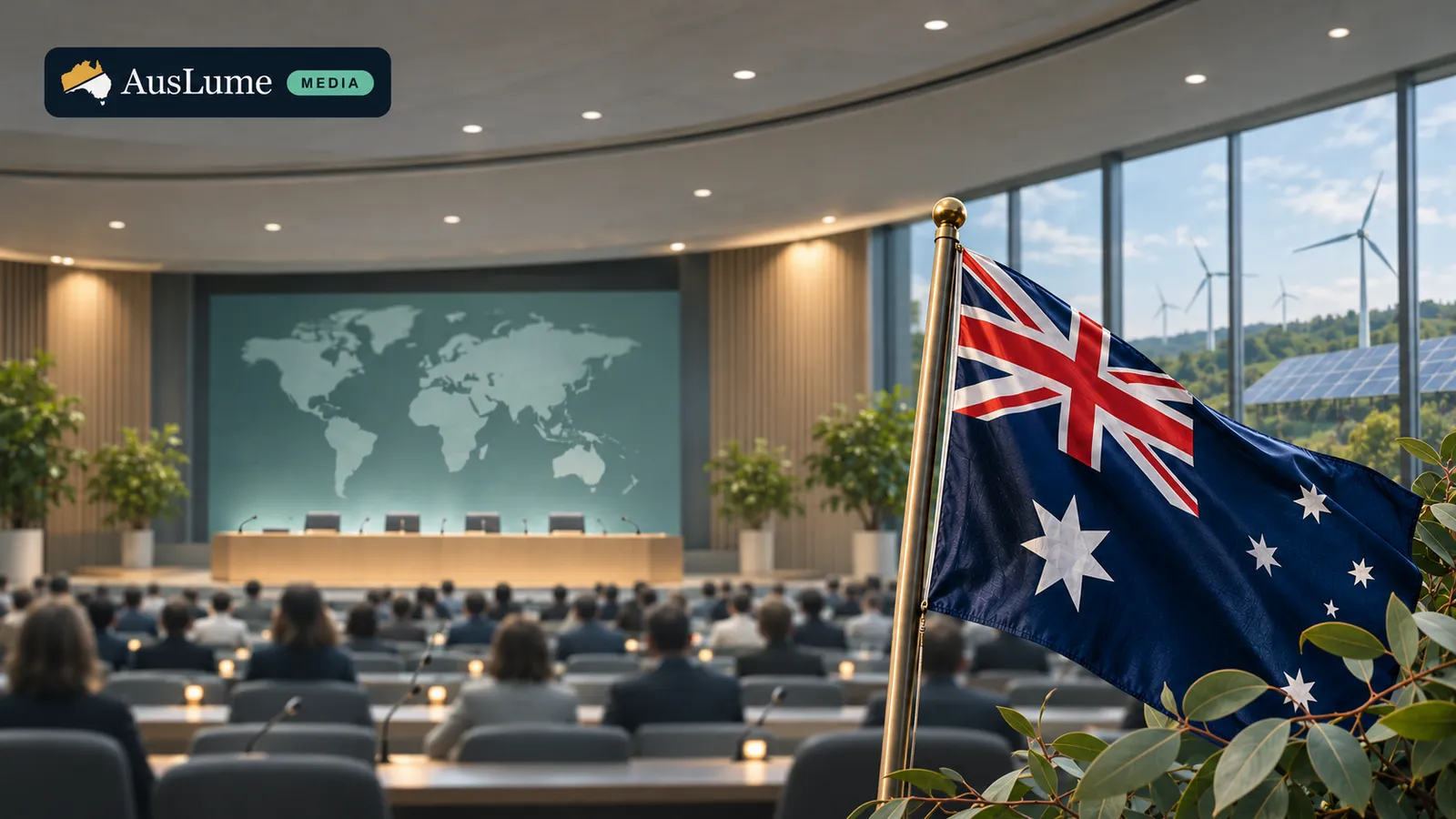
Australia is facing increasing scrutiny over its climate commitments as the COP31 United Nations climate conference enters its second week in Antalya, Türkiye.
Climate Change and Energy Minister Chris Bowen is leading international negotiations involving more than 190 countries. Governments remain divided over how quickly the world should move away from fossil fuels and accelerate the adoption of cleaner energy.
The conference is scheduled to conclude on 20 November 2026.
Key points
Australia is serving as President of Negotiations at COP31, with Türkiye hosting the conference.
A proposed global electrification pledge aims to increase electricity's share of final energy consumption to 35 per cent by 2035.
Climate advocates are calling for stronger commitments to move away from coal, oil and gas.
Australia is facing scrutiny over its continued fossil fuel exports.
Pacific climate resilience and access to climate finance remain central priorities.
A first draft of a negotiated agreement is expected early in the conference's second week.
What is Australia's role at COP31?
The 31st United Nations Climate Change Conference is taking place in Antalya from 9 to 20 November 2026.
Under an international partnership between Australia and Türkiye, Australia is responsible for leading the negotiations, while Türkiye hosts the conference.
Australian Climate Change and Energy Minister Chris Bowen is working with participating governments to develop agreed outcomes.
Australia has identified four major priorities:
Accelerating electrification and clean energy adoption.
Encouraging investment in emissions reduction technologies.
Improving access to climate finance.
Strengthening international action to protect oceans.
The challenge is securing agreement between countries with different economic circumstances, energy requirements and national priorities.
At a press conference on 14 November, UN Climate Change Executive Secretary Simon Stiell urged countries to address the most difficult negotiating issues without further delays.
What is the COP31 '35 by 35' proposal?
One of the conference's major proposals is the Global Electrification Pledge, commonly referred to as 35 by 35.
It aims to increase electricity's share of worldwide final energy consumption from approximately 23 per cent to 35 per cent by 2035.
This represents a proposed increase of 12 percentage points.
Electrification involves replacing equipment and processes that directly consume fossil fuels with technologies powered by electricity.
Examples include:
Replacing petrol and diesel vehicles with electric vehicles.
Installing electric heat pumps instead of gas heating systems.
Electrifying industrial machinery and manufacturing processes.
Expanding electric public transport networks.
The proposal is intended to reduce dependence on fossil fuels, improve energy security and support emissions reduction.
However, its environmental benefits depend significantly on how the additional electricity is generated.
Why is the electrification proposal controversial?
The proposed pledge does not explicitly require all additional electricity generation to come from renewable sources.
Some governments and environmental organisations are concerned that increased electricity consumption could continue supporting coal and gas power generation.
They argue that electrification must occur alongside a credible transition towards low-emissions electricity sources.
Supporters of the proposal maintain that it provides a practical opportunity to build agreement between countries that have previously struggled to reach consensus on reducing fossil fuel use.
UN Secretary-General António Guterres has welcomed the electrification ambition while emphasising the importance of generating electricity from clean sources.
The proposal remains part of ongoing discussions. It should not be mistaken for a binding international commitment that has already been adopted.
Australia's fossil fuel exports face scrutiny
Australia's leadership role at COP31 has brought renewed international attention to its coal and gas industries.
Environmental advocates have questioned how Australia can advocate for stronger international climate action while continuing to approve fossil fuel developments and export substantial quantities of coal and gas.
Chris Bowen has rejected suggestions that Australia's export industries undermine its ability to lead the negotiations.
The Australian Government argues that increasing renewable energy investment and reducing domestic emissions are important components of the transition.
Critics maintain that Australia's international climate contribution should also account for the wider environmental consequences of fossil fuels exported overseas.
Under international greenhouse gas accounting arrangements, emissions associated with burning exported fuels are generally recorded in the countries where the combustion occurs.
This distinction remains central to the debate over the responsibilities of fossil fuel-producing nations.
What are Australia's climate targets?
Australia has established national emissions reduction targets as part of its transition towards net zero.
Target year | National commitment |
|---|---|
2030 | Reduce emissions by 43% below 2005 levels |
2035 | Reduce emissions by 62–70% below 2005 levels |
2050 | Achieve net zero emissions |
Meeting these commitments will require changes across electricity generation, transport, industry, agriculture and the built environment.
The government has identified renewable energy expansion, electrification and industrial decarbonisation as important components of its strategy.
However, achieving the targets will depend on the implementation and effectiveness of domestic policies over the coming years.
Pacific nations demand practical climate action
Prime Minister Anthony Albanese has used COP31 to highlight the impact of climate change on Australia's Pacific neighbours.
Low-lying island nations, including Tuvalu and Kiribati, face significant challenges associated with rising sea levels, coastal erosion, water security and extreme weather.
Speaking at the conference on 12 November, Albanese highlighted Australia's $100 million contribution to the Pacific Resilience Facility.
The Pacific-led initiative supports communities in preparing for climate-related challenges through projects involving water security, sanitation, infrastructure and disaster preparedness.
For many Pacific communities, climate negotiations are directly connected to the long-term protection of homes, livelihoods and cultural identity.
Is the world on track to meet the 1.5°C climate goal?
The United Nations Environment Programme's Emissions Gap Report 2026 concludes that global temperatures are expected to exceed 1.5°C above pre-industrial levels.
The report calls for substantial and urgent reductions in greenhouse gas emissions to limit the extent and duration of that temperature increase.
Exceeding the threshold does not mean further climate action is pointless.
Limiting additional warming remains important because climate-related risks generally increase as temperatures rise.
The findings place additional pressure on COP31 participants to turn earlier commitments into measurable action.
What could COP31 mean for Australian households and businesses?
The conference could influence Australia's future energy policies, international investment and industrial development.
Stronger international cooperation could support investment in renewable energy, electricity storage, electric transport and clean technology.
Businesses operating in emissions-intensive industries may also face changing international market conditions as trading partners introduce stronger climate policies.
For households, electrification could reduce exposure to volatile international oil and gas prices over time.
However, COP31 does not automatically change Australian electricity bills, household regulations or government rebates.
Any direct domestic impacts will depend on future Australian policy decisions, infrastructure investment and energy market conditions.
What happens next at COP31?
As negotiations enter their second week, attention is turning towards the wording of a potential agreement.
Chris Bowen has indicated that an initial draft is expected early in the week.
Key issues include the ambition of the electrification proposal, fossil fuel transition commitments, climate finance and support for vulnerable developing countries.
The conference is scheduled to finish on Friday, 20 November 2026.
As of 15 November, a final negotiated outcome has not been announced.
Australia's leadership will ultimately be assessed against whether participating countries can reach an agreement that delivers meaningful climate action while recognising their differing national circumstances.

About the author
RullikClear, sourced explainers on Australia and the world
Rullik is the pen name of the founder of Australia Illuminate (Auslume). Rullik writes plain-language explainers on life in Australia, from immigration, study and work to money, sport and screen culture, always linking to the official sources behind each story. Every story is reviewed before publication.
More from Rullik ↗Image credits
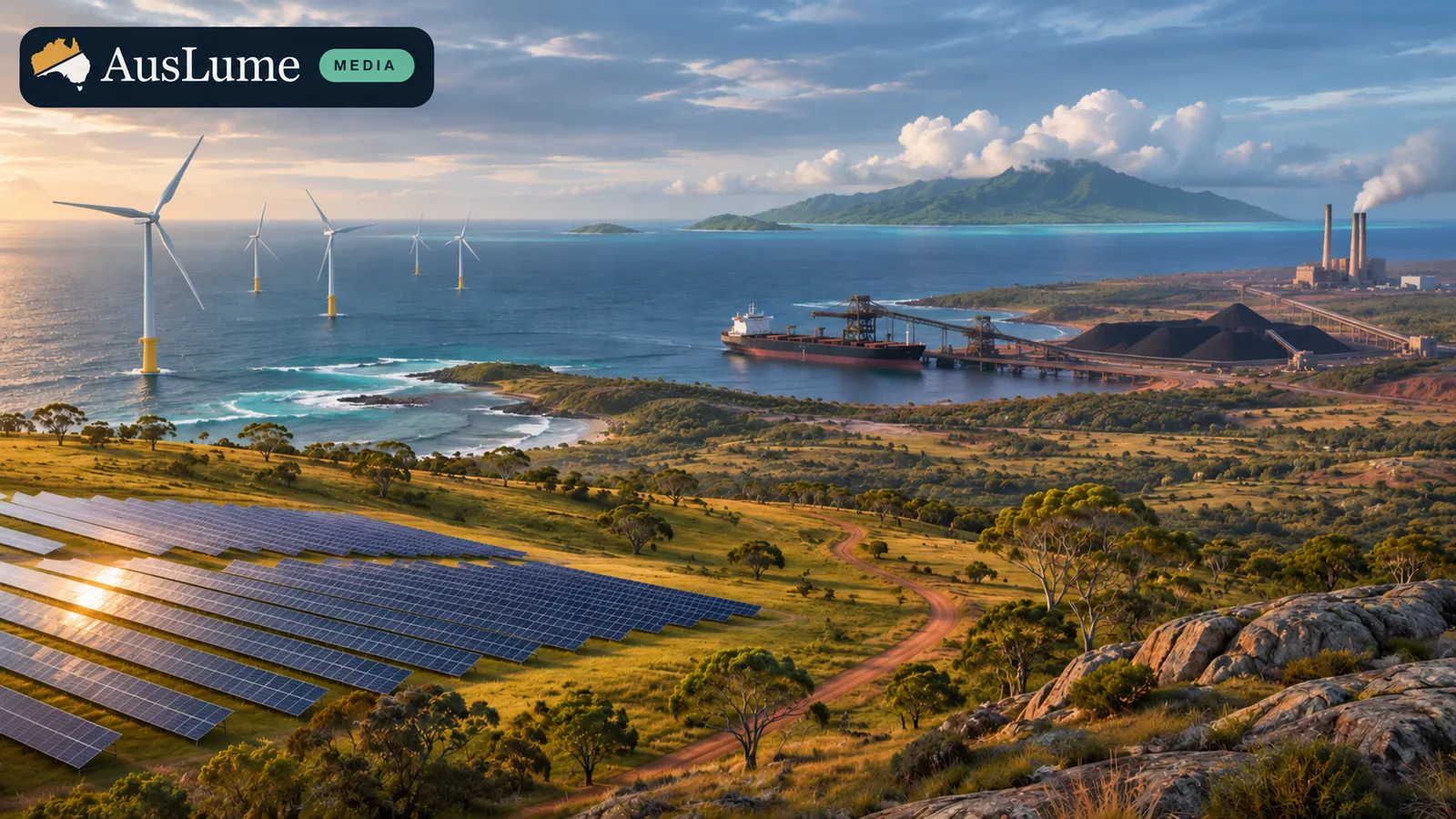
- : An illustrative Australian coastal landscape featuring renewable energy infrastructure, a coal export terminal and industrial facilities.: AusLume Media original AI-assisted editorial artwork using official brand assets.
Sources
- https://unfccc.int/cop31/about
- https://unfccc.int/cop31
- https://www.dcceew.gov.au/climate-change/international-climate-action/unfccc-cop/cop31
- https://www.pm.gov.au/media/cop31-leaders-summit-opening-ceremony
- https://www.pm.gov.au/media/high-level-event-clean-energy-transition-and-electrification
- https://www.pm.gov.au/media/pacific-resilience-facility-showcase
- https://minister.dcceew.gov.au/bowen/speeches/speech-cop31-leaders-plenary-antalya-turkiye
- https://www.dcceew.gov.au/climate-change/emissions-reduction
- https://www.unep.org/en/publications/report/emissions-gap-report-2026
- https://www.reuters.com/sustainability/cop/un-climate-chief-urges-speed-cop31-confronts-fossil-fuel-divide-2026-11-14/
- https://www.abc.net.au/news/2026-11-15/climate-ambition-political-reality-cop31-albanese/107383424