Watch the video
Player by YouTube. Open original video ↗
A dryer with more stars can look like an easy purchase decision. Before comparing it with the next machine, check the capacity and the energy-consumption figure. Two labels can tell you something useful without describing the same sized load or your household's actual routine.
The Australian Government's Energy Rating material explains how to compare clothes dryers and the information on their labels. Use that information alongside the manufacturer's installation and operating requirements. A machine that appears economical on paper can still be unsuitable for the space where you intend to put it.
Compare machines that can do your job
Start with the amount of laundry you need to dry and the space available. A person drying an occasional load has a different task from a household using the machine frequently. Write down that pattern before deciding how much capacity you need.
A larger rated load should not be interpreted as an instruction to pack every garment into one cycle. Follow the instructions for the machine and the fabric. Different programs can have different limits, so read the manual rather than relying only on the largest number on a shop label.
For a fictional apartment household, a smaller machine used several times might be less convenient than one suitable for its normal load. Another household may have room to line-dry most washing and need a dryer only occasionally. Neither example establishes a universal best size.
Give the energy number its units
The energy-consumption figure is expressed in kilowatt-hours under specified test conditions. It is not a dollar amount. To estimate a corresponding electricity cost, the energy figure needs to be considered with an electricity usage rate and the assumptions behind the figure.
As a deliberately simplified arithmetic example, 100 kilowatt-hours at an assumed 30 cents per kilowatt-hour would cost $30. Those numbers are fictional, not a forecast for any dryer or a current tariff recommendation. They show why a label's energy number and a bill's usage rate are different inputs.
Avoid adding a household's fixed daily electricity charge to every appliance comparison as though each new appliance creates a separate daily account. If you use a calculator, read how it treats tariffs and usage. Keep the assumptions with the result.
Stars are useful within the right comparison
The official Energy Rating guidance explains the star scale and comparison conditions. Read the label for the relevant product rather than carrying an air-conditioner's climate-zone interpretation into a clothes-dryer comparison.
Compare the exact model code. Retail names can cover more than one variant, and a product photo may be reused across a range. Keep the model number, capacity and energy figure together in your notes so that an attractive price does not get matched with the wrong label.

Washer-dryer combinations need particular attention. The Energy Rating material notes separate labels for washing and drying functions. A favourable washing figure does not, by itself, describe the energy use of the drying function. Check what each label is measuring.
Installation can decide the shortlist
Heat-pump, condenser and vented machines have different operating arrangements. Ask how moisture is managed, what clearance is required and whether the proposed location meets the manufacturer's instructions. Check stacking arrangements only against approved information for the relevant machines.
For renters, distinguish an appliance purchase from permission to modify the property. If installation would require a change to a wall, fitting or existing equipment, clarify the appropriate process first. This article does not determine a tenancy right or approve an installation.
Delivery also belongs in the comparison. Measure the route through doors and hallways, not just the final laundry space. Find out what delivery, installation and removal services actually include before assuming that the price covers all of them.
Running cost is only part of ownership
An energy comparison does not tell you how easily a filter can be cleaned, whether the controls are readable or whether the door works well in a narrow room. Look at those details in person where possible and read the maintenance instructions before buying.
Ask how the machine signals a full water container or a maintenance task, if those features apply. Someone buying for an older relative may value visible controls and clear alerts more than an app feature that relative does not intend to use.
Do not treat a predicted payback period as a promise. Its result depends on the purchase-price difference, actual usage and energy prices. If your household rarely uses a dryer, a small change in the usage assumption can make a long-term savings claim look very different.
Build a comparison you can revisit
Keep a shortlist with the exact model, capacity, label figures, current purchase price, installation requirements and the practical reason it fits your household. Mark anything the retailer has not answered. That note is more valuable than choosing the largest star count without remembering which model it belonged to.
Use the official product database and the current manufacturer documents to resolve inconsistencies. If a retailer displays conflicting specifications, seek clarification before paying. An undated online review should not settle a discrepancy between two current model codes.
The best outcome is a dryer that fits the laundry, the washing routine and the budget under understood assumptions. The label provides evidence for that decision. It does not make the decision on its own, and it should not be turned into a guaranteed household saving.
Related video: Energy Rating. Official guide to the Energy Rating Label.
Read more from AusLume Media: why plain-language explanations matter.

About the author
RullikClear, sourced explainers on Australia and the world
Rullik is the pen name of the founder of Australia Illuminate (Auslume). Rullik writes plain-language explainers on life in Australia, from immigration, study and work to money, sport and screen culture, always linking to the official sources behind each story. Every story is reviewed before publication.
More from Rullik ↗Image credits
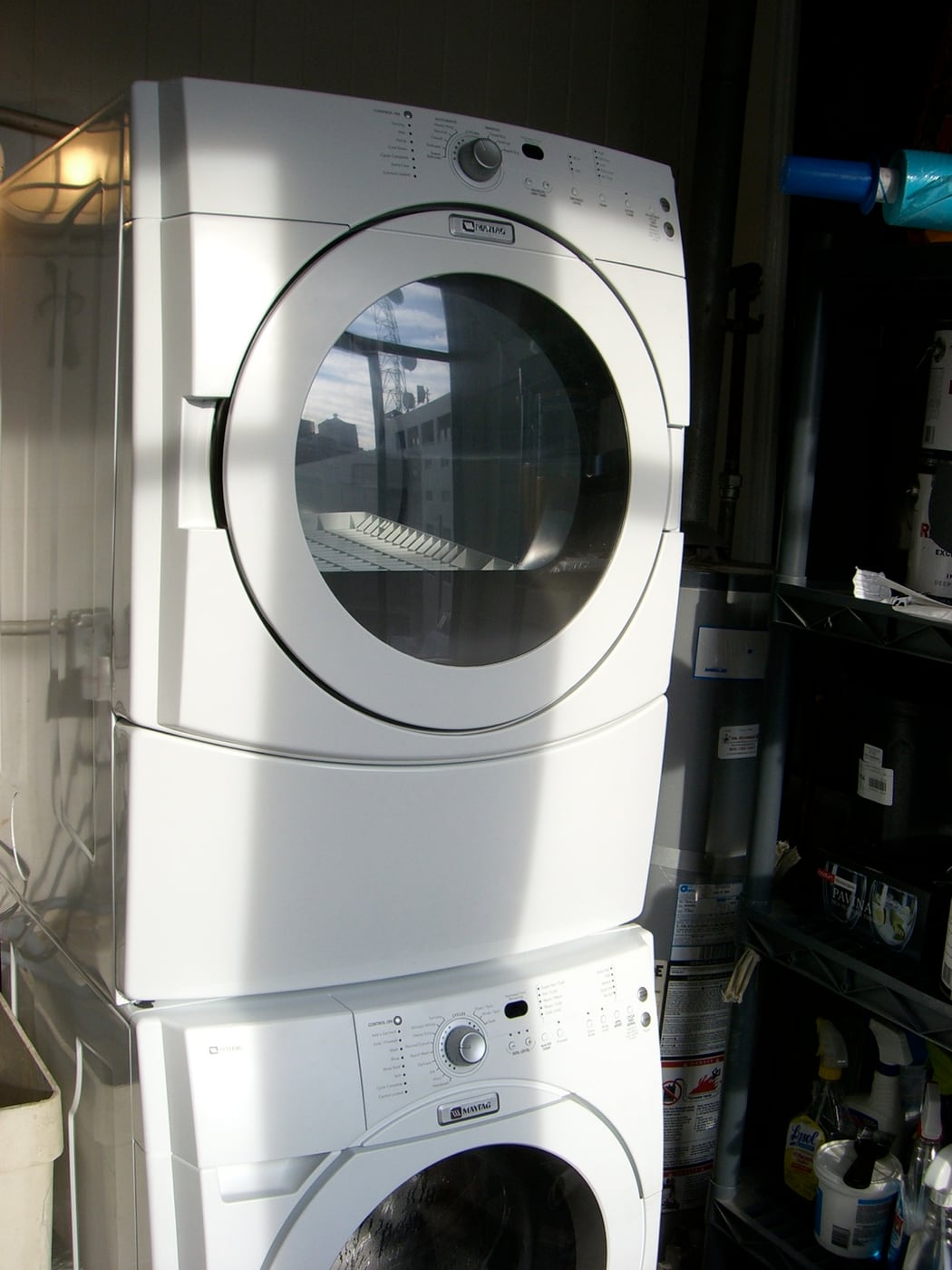
- A washing machine and clothes dryer stacked in a laundry.: Photo: tara hunt / Wikimedia Commons. CC BY-SA 2.0 (https://creativecommons.org/licenses/by-sa/2.0). Resized, without cropping. Source: https://commons.wikimedia.org/wiki/File:New_Washer_%26_Dryer!.jpg