One electricity offer promises a discount from a reference price. Another advertises a credit or a lower usage rate. Meanwhile, the daily charge on your current bill may receive little attention in either pitch.
Compare what each plan would cost for your household's actual use and the conditions attached to the offer.
This explainer accompanies the week's inflation debate. It does not report a new nationwide tariff increase, and prices differ between households and locations.
Start with the whole bill
The Australian Government's energy guidance explains that bills include usage-related costs and other charges. The amount paid depends on both consumption and the prices attached to it. [1]
Here is a fictional comparison for a household using 10 kilowatt-hours a day. Plan A charges $1 a day plus 30 cents per kilowatt-hour. Plan B charges $1.30 a day plus 28 cents per kilowatt-hour. Ignoring all other charges, discounts and taxes, Plan A costs $4 a day while Plan B costs $4.10. The lower usage rate has not produced the lower total.
The result can change at a different level of consumption. These are fictional prices used to demonstrate the calculation, not current retailer offers.
Know what the percentage is comparing
The Australian Energy Regulator explains that the Default Market Offer also provides a reference point for comparing offers in the areas where it applies. The comparison uses a benchmark level of consumption. A household's own bill still depends on its usage and the retailer's rates. [2]
Do not assume the headline estimate describes your exact household, or that one reference arrangement covers every state and every tariff. A comparison is useful only when the basis is understood.
If the offer relies on conditions, read those conditions before counting the saving. A one-off credit, an ongoing rate and a benefit available only when you meet a requirement have different effects over a year. Ask what happens when the introductory period ends.
Use the comparison service for your location
Energy Made Easy is the government comparison service for households and small businesses in NSW, Queensland, South Australia, Tasmania and the ACT. Victorian Energy Compare serves Victoria. Government energy guidance links to the relevant arrangements for other jurisdictions. [1][3]
Energy Made Easy explains how it uses the information supplied to compare plans and estimate costs. The result is a comparison aid, not a guarantee that future usage or charges will be identical to the estimate. [4]
Use a recent bill and check that the address, tariff and consumption assumptions are appropriate. If the plan shown on a comparison service seems different from the retailer's offer, ask the retailer to identify the exact plan and explain the difference before agreeing.
Timing matters as much as total consumption
For a time-of-use plan, when electricity is used can matter as well as how much is used. A household that can shift some consumption may face a different comparison from one whose essential routine cannot move. Do not assume everybody can change their schedule simply because an off-peak rate looks attractive.
Write down each plan's annual estimate, daily charge and usage rates. Add the conditions, any promotion end date and the usage figure behind the estimate. Include solar export assumptions if relevant. Compare benefits over the same period.
Keep a record of what you accepted
Save the written plan information and the date you agreed to it. When the first bill arrives, compare the actual rates and conditions with that record. A lower-than-expected bill is not necessarily proof of a better rate if the billing period or usage was smaller; the reverse is also true.
If paying is becoming difficult, ask the retailer about assistance rather than treating a switch as the only possible response. The AER's consumer resources explain the available pathways. [5]
Keep the comparison with your plan documents so you can check it against later bills. Rates and usage can change, so the cheapest option today may not stay that way.
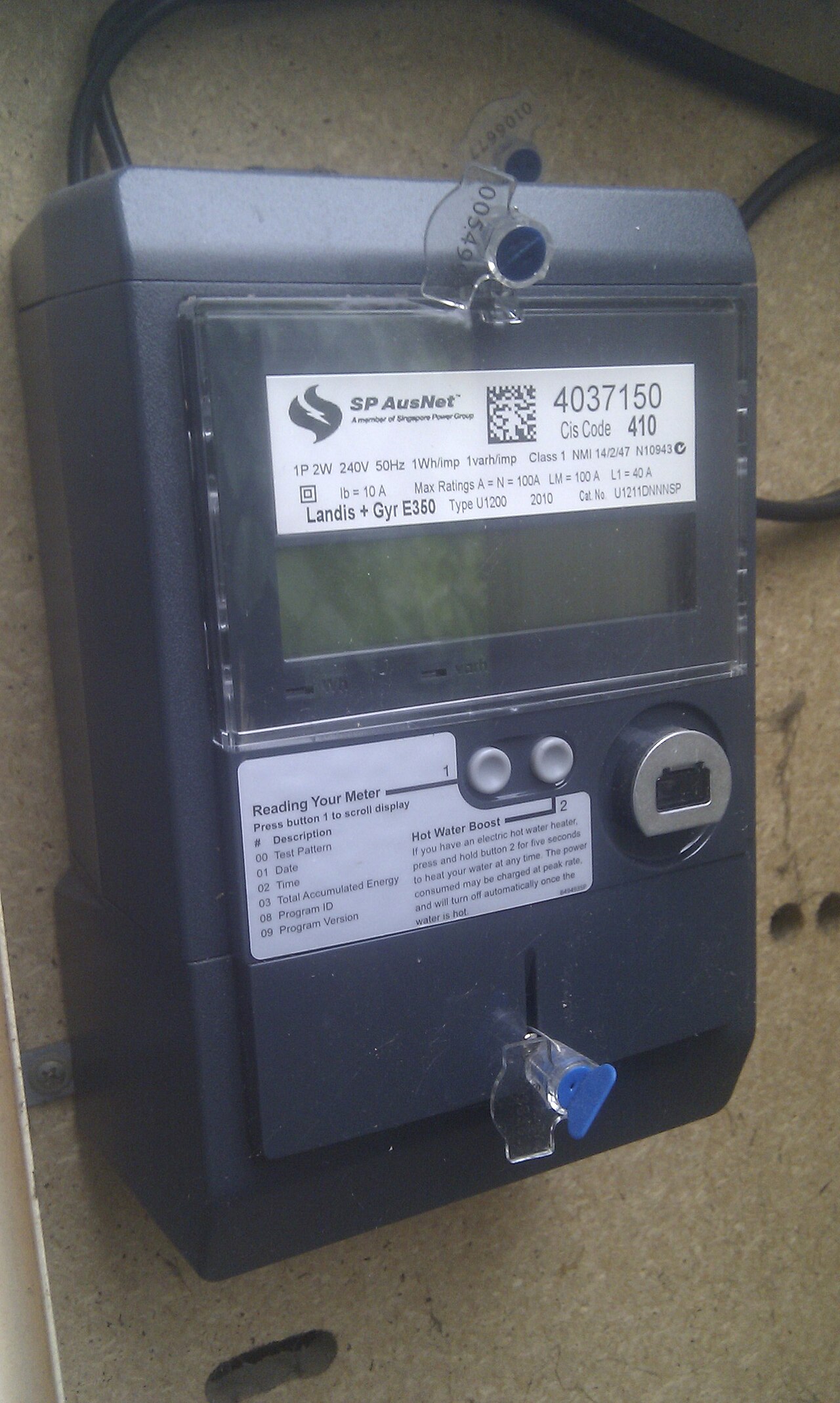
Image: An electricity smart meter in Victoria. File photograph; plans and tariffs vary by location. Credit: Christopher Corneschi. Wikimedia Commons original. CC BY-SA 3.0. No image edits.

About the author
RullikClear, sourced explainers on Australia and the world
Rullik is the pen name of the founder of Australia Illuminate (Auslume). Rullik writes plain-language explainers on life in Australia, from immigration, study and work to money, sport and screen culture, always linking to the official sources behind each story. Every story is reviewed before publication.
More from Rullik ↗Sources
- https://www.energy.gov.au/households/find-the-best-energy-deal
- https://www.aer.gov.au/industry/retail/default-market-offer
- https://www.energy.gov.au/rebates/energy-made-easy
- https://www.energymadeeasy.gov.au/article/how-the-energy-made-easy-plan-search-works
- https://www.aer.gov.au/consumers/understanding-energy/energy-services