Watch the video
Player by YouTube. Open original video ↗
There may be a bird you hear every morning without ever stopping to identify it. The Aussie Bird Count gives that ordinary moment a purpose: spend a short period watching one place, record what you can identify and contribute an observation.
BirdLife Australia has announced that the 2026 count runs from 19 to 25 October. It asks people to take part in twenty-minute counts in their local surroundings. A backyard, nearby park or other suitable place can be a starting point. The invitation is open to beginners as well as experienced birdwatchers.
Begin by deciding where you can sit or stand safely, see a reasonable part of the area and give the task your attention. Read the entry method before setting out, so the short observation period can stay focused on the birds.
Choose a place you can actually watch
A familiar place has an advantage: you already know how to reach it and where you can stay without obstructing a path or entering private property. You can spend the count looking for birds rather than finding your way around.
Before the event, visit the spot briefly. Notice whether traffic noise makes calls difficult to hear, whether the sun will be in your eyes and whether you need an accessible seat. These are planning suggestions, not official requirements for a valid submission.
If children are joining you, agree on a place to stay together and a way to share sightings. The purpose is careful observation, so nobody needs to rush after a bird that has flown out of view. A short practice session can help everyone learn the difference between watching a bird and deciding they know which species it is.
Know the counting rule before starting
The event's instructions describe a stationary twenty-minute count. For each species, record the largest number seen together during that period, rather than repeatedly adding returning birds. Leave out birds you cannot identify confidently; identifiable calls can also be used. A group watching together should submit one shared count rather than duplicate the same observation.
Here is a simple illustration of the maximum-number rule. Three birds of one species appear together, then leave. Later, two appear. Recording five would assume that all were different individuals. Under the count's method, three is the number to enter.
The instructions also explain repeat counts and the submission tools. Check those directions before the event, particularly if you intend to use the website rather than the app. The website entry form is expected to open in mid-October.
You can prepare a small list of likely birds without treating it as a prediction. Leave room to record the actual sighting and any uncertainty. A count should describe the observation, not what you hoped would be there.
Identification is more useful than a big total
A beginner can make the task easier by learning a few distinguishing features in advance. Look at a bird's shape, size relative to familiar birds, bill and markings, rather than relying on a single colour seen briefly.
That is a suggested approach to observation, not a replacement for the event's identification resources. Where two species remain difficult to distinguish, uncertainty is a good reason to leave the record out.
A modest list of confident identifications is useful work. Trying to make a count more impressive by guessing undermines the reason for taking part. The same applies to an unexpected sighting: enjoy the moment, but separate what was clearly observed from what might have been there.
Keep the birds' needs ahead of the photograph
The event's ethical birdwatching guidance asks observers to avoid disturbance. Give birds space, take particular care around nests, respect access restrictions and stay on appropriate paths. Do not use calls, drones or intrusive lighting to bring birds into view.
A photograph can be a pleasant record, but it is not worth changing the bird's behaviour to get one. An image from farther away may be less dramatic and still be an honest account of the experience.
When sharing a family outing, think separately about who appears in the photo and what location information accompanies it. Participation does not require posting identifiable photographs of children or other people on social media.
Read the results with the right question
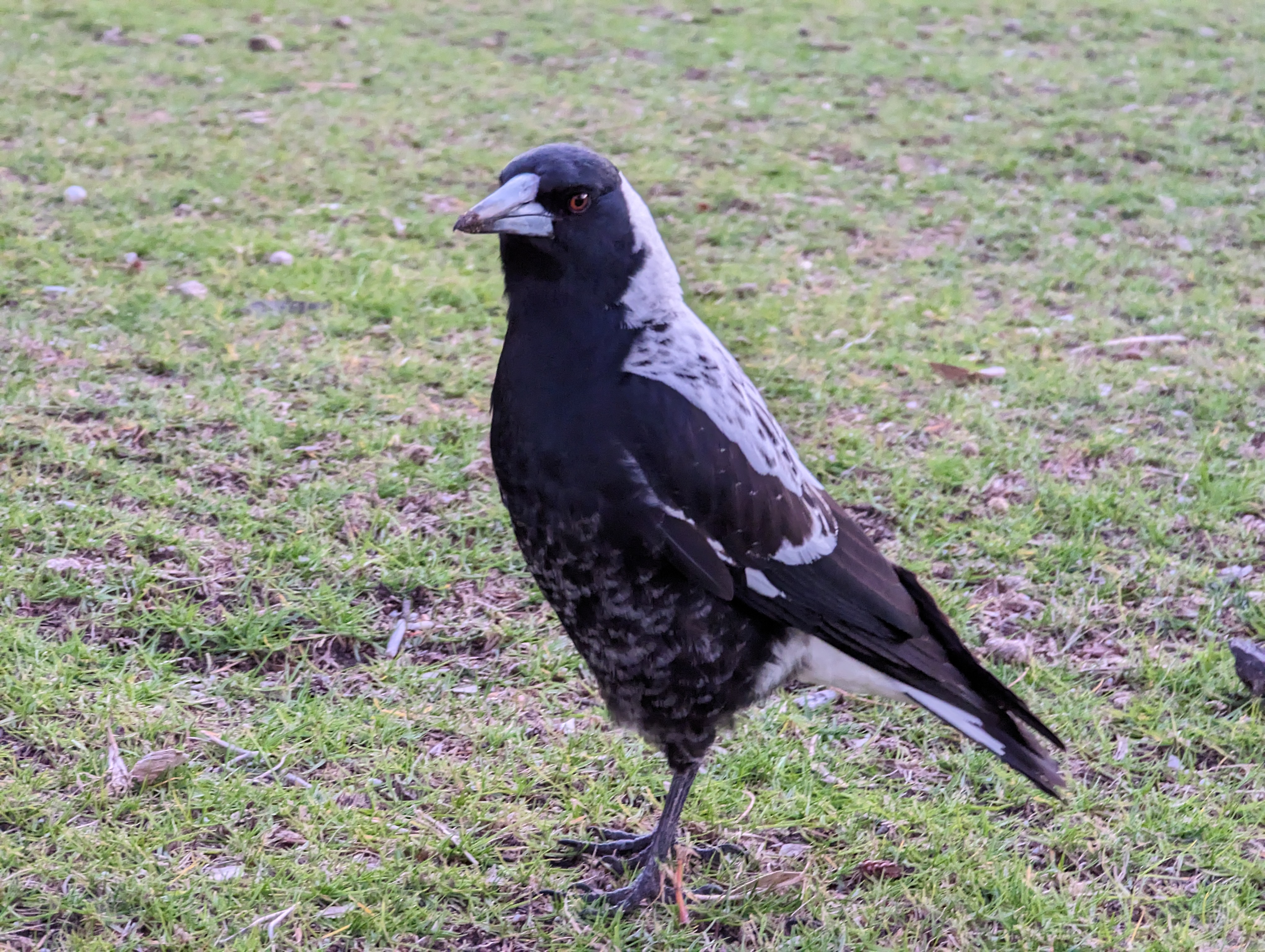
The 2025 results offer a useful example of different measures telling different stories. The Australian magpie appeared in about half of surveys, while the rainbow lorikeet led the numerical count. A bird can be widely reported without having the largest total number recorded.
Those figures answer different questions: how often a species appeared in surveys, and how many were counted. Neither is automatically a census of every bird in Australia.
The event's guidance also cautions against reading a simple ranking as proof of a population trend. Weather, where people count and the effort involved can affect observations. Later analysis needs to account for how the information was gathered.
For now, preparation can stay simple. Choose your place, read the method, practise identifying a few local birds and set aside twenty minutes during the event. The useful contribution is a careful account of what you observe, including the discipline to leave an uncertain sighting unrecorded.

About the author
RullikClear, sourced explainers on Australia and the world
Rullik is the pen name of the founder of Australia Illuminate (Auslume). Rullik writes plain-language explainers on life in Australia, from immigration, study and work to money, sport and screen culture, always linking to the official sources behind each story. Every story is reviewed before publication.
More from Rullik ↗