Planning a spring weekend? Warmer conditions are favoured across much of Australia, but rainfall prospects vary by region. The national outlook will only take you so far.
The Bureau of Meteorology's outlook checked on 30 September points to above-average daytime temperatures across most of the country for October to December, and above-average overnight temperatures across Australia. Rainfall signals differ between the west and central regions, the south-east and the far north. [1]
This is a seasonal assessment. It does not tell you whether a particular Saturday will be wet, whether your street will flood or whether a specific fire will start.
Read the location before the headline
The Bureau identifies a higher chance of above-average October-to-December rainfall across much of Western Australia and parts of central Australia. It identifies a higher chance of below-average rain in areas including much of southern and eastern Victoria and Tasmania. Some areas have roughly equal chances either way. The monthly picture for October also differs from the three-month picture. [1]
Check the map for your location and the period beside it. A single 'wet spring' or 'dry spring' headline cannot describe the outlook for the whole country.
A forecast for October alone and a forecast for the combined October-to-December period can legitimately look different. Rainfall later in the season can change the three-month total. Neither map should be silently substituted for the other.
What a probability actually tells you
The Bureau's long-range guidance explains that forecasts describe the chance of outcomes such as rainfall being above or below the usual median. They do not allocate an exact sequence of rainy and dry days. [2]
As a simple illustration, a 70% chance of a seasonal total exceeding a threshold still leaves a 30% chance that it will not. It does not mean rain on 70% of days, or that every location inside a broad region will experience the same amount. The event being forecast matters as much as the percentage.
The median is a reference point drawn from historical observations. Being above it does not automatically mean a disaster, just as being below it does not mean there can be no intense downpour. Different questions require different forecasts and warnings.
Use the outlook for preparation, not certainty
Use the seasonal outlook to prepare, then revisit your plans as the date gets closer. Check how your household receives weather warnings. If you are organising an outdoor event, work out a backup.
A seasonal rainfall signal alone is a poor reason to cancel an event months ahead. Local warnings still need attention during a season described as dry.
For home visits, deliveries and outdoor work, use the seasonal outlook to prepare. Check the shorter-range forecast when planning the day's route and follow current warnings when conditions become hazardous.
Climate drivers do not replace local information
The Bureau discusses the ocean and atmosphere signals behind its outlook and cautions that a strong El Niño signal does not necessarily produce equally strong rainfall and temperature impacts everywhere in Australia. [1] A familiar climate label is not a complete local forecast.
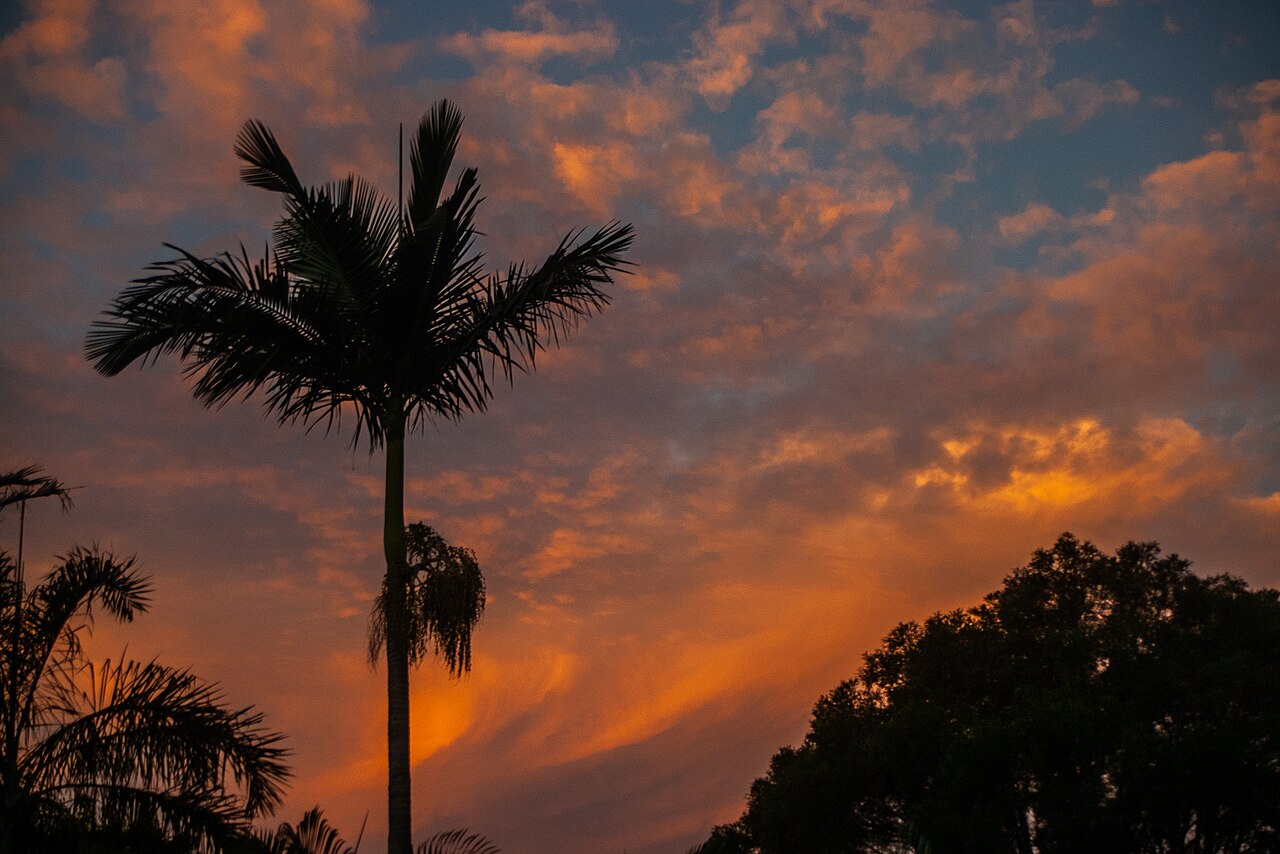
The photograph accompanying this article is a file image from Queensland. It shows past conditions and should not be read as evidence of today's weather.
Before sharing a weather post, check its issue date, region and forecast period. Before travelling or making a safety decision, use the current Bureau forecast and relevant local warnings rather than this article. [3]
Image: Clouds over Geebung, Queensland. File photograph, not a current warning or forecast image. Credit: John Robert McPherson. Wikimedia Commons original. CC BY-SA 4.0. No image edits.

About the author
RullikClear, sourced explainers on Australia and the world
Rullik is the pen name of the founder of Australia Illuminate (Auslume). Rullik writes plain-language explainers on life in Australia, from immigration, study and work to money, sport and screen culture, always linking to the official sources behind each story. Every story is reviewed before publication.
More from Rullik ↗