In short: If you have Middle East flights booked, Smartraveller now advises Australians not to travel to King Khalid International Airport in Riyadh. It advises a high degree of caution in the UAE and Qatar, where airspace can close at short notice.
If you are flying to Europe through the Middle East in the coming weeks, the official advice changed again this week. Here is what the Australian Government's Smartraveller service says, as of 13 October.
Saudi Arabia: do not travel to Riyadh's main airport
Smartraveller's advice for Saudi Arabia, updated on 13 October, is to reconsider your need to travel to the country overall, with higher levels in some areas. It now advises Australians not to travel to King Khalid International Airport in Riyadh "due to recent security incidents that have disrupted airport operations".
Smartraveller says that since 13 July the Houthis, an armed group in Yemen, have renewed attacks against Saudi Arabia, including strikes on Riyadh, regional airports and energy and civilian infrastructure. It says the group has threatened to target Saudi airports and airspace, except those in Mecca and Medina, and that further incidents may happen with little or no warning.
Its practical advice for anyone in Saudi Arabia: do not leave for the airport until your airline or travel provider has confirmed your flight, follow local authorities and airport staff, and minimise time at Saudi airports.
The ABC reported that flights to and from Riyadh had been suspended or diverted, and that Qatar Airways and Etihad had cancelled flights to Riyadh and Dammam. It also reported Foreign Minister Penny Wong's statement condemning the Houthi strikes.
UAE and Qatar: high degree of caution
The big Gulf transit hubs are at a lower level. Smartraveller advises a "high degree of caution" for both the United Arab Emirates and Qatar. Both pages were updated on 8 October, when Smartraveller lowered the overall level for each country.
Even so, both pages warn that airspace may open or close at short notice. For the UAE, that would affect flights at Abu Dhabi and Dubai international airports. For Qatar, it would affect Hamad International Airport in Doha.
Booking Middle East flights to Europe
The ABC reported that the Emirates, Etihad and Qatar Airways hubs had not been directly affected by the latest fighting, and that Riyadh is not a major transit point for Australians. An aviation lecturer told the ABC that rerouted flights can take longer and that schedule changes can lead to delays or missed connections.
Before you travel:
Check your airline's updates close to departure, and again before you head to the airport.
Read the Smartraveller page for every country you transit, not just your destination. Levels can differ between neighbouring countries and change quickly.
Subscribe to Smartraveller updates for the countries on your route, so you hear about changes as they happen.
Check your travel insurance. Many policies treat government travel advice levels differently, so read what yours covers before you book or depart.
Leave buffer time between connecting flights where you can.
How often does the advice change?
These levels are a snapshot from 13 October. Smartraveller's pages show the date each one was last updated and checked as current. Treat that date as part of the advice, and check again before you fly.
Related on AusLume Media
Travel insurance: check the trip you are taking, not just the price
An embassy can help overseas. It cannot solve every travel emergency
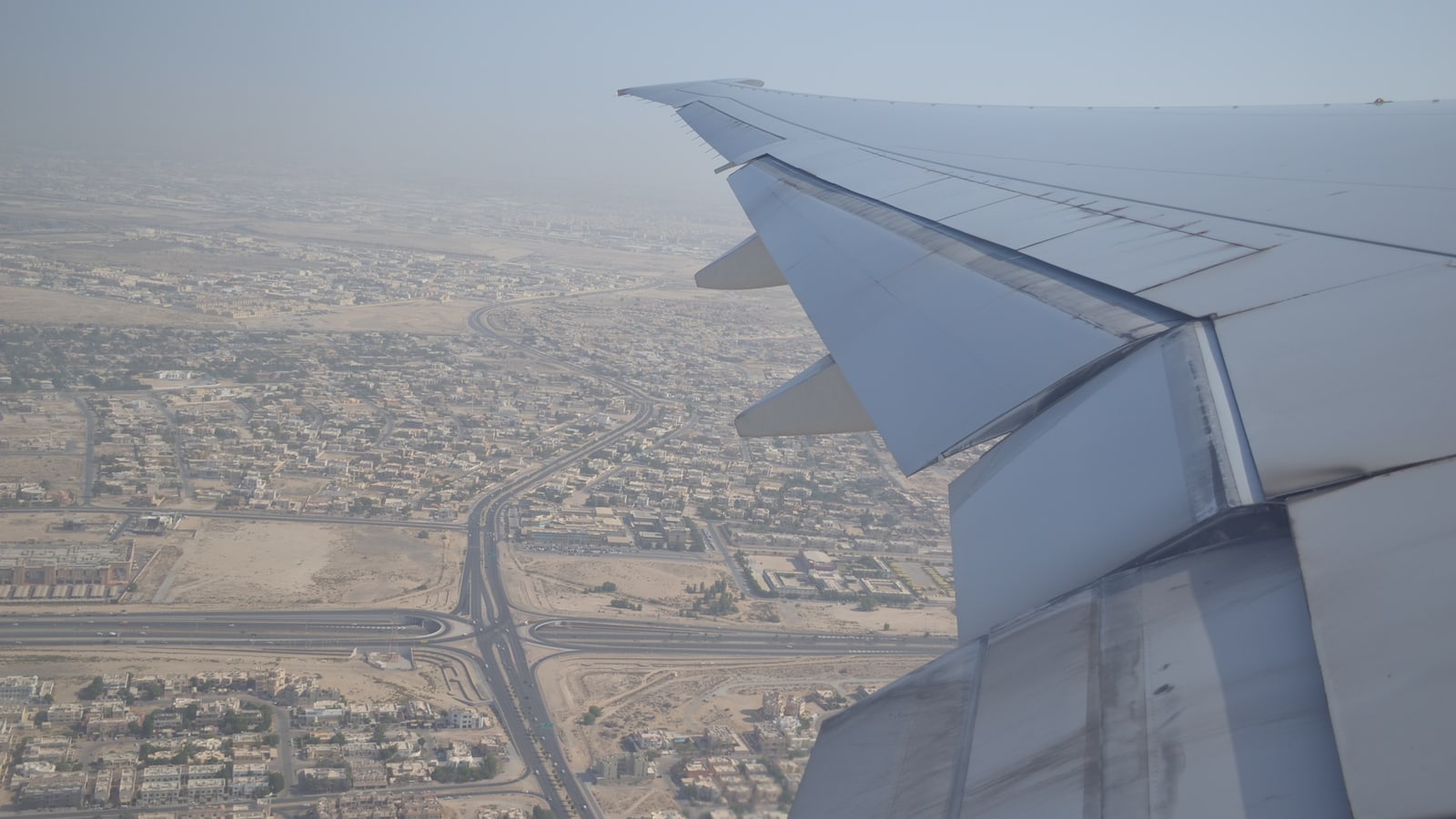
Cover photo: Alec Wilson from Khon Kaen, Thailand via Wikimedia Commons, licensed under CC BY-SA 2.0. Cropped to fit.

About the author
RullikClear, sourced explainers on Australia and the world
Rullik is the pen name of the founder of Australia Illuminate (Auslume). Rullik writes plain-language explainers on life in Australia, from immigration, study and work to money, sport and screen culture, always linking to the official sources behind each story. Every story is reviewed before publication.
More from Rullik ↗Sources
- https://www.smartraveller.gov.au/destinations/middle-east/saudi-arabia
- https://www.abc.net.au/news/2026-10-13/is-flying-through-the-middle-east-still-safe/107255194
- https://www.smartraveller.gov.au/destinations/middle-east/united-arab-emirates
- https://www.smartraveller.gov.au/destinations/middle-east/qatar