Watch the video
Player by YouTube. Open original video ↗
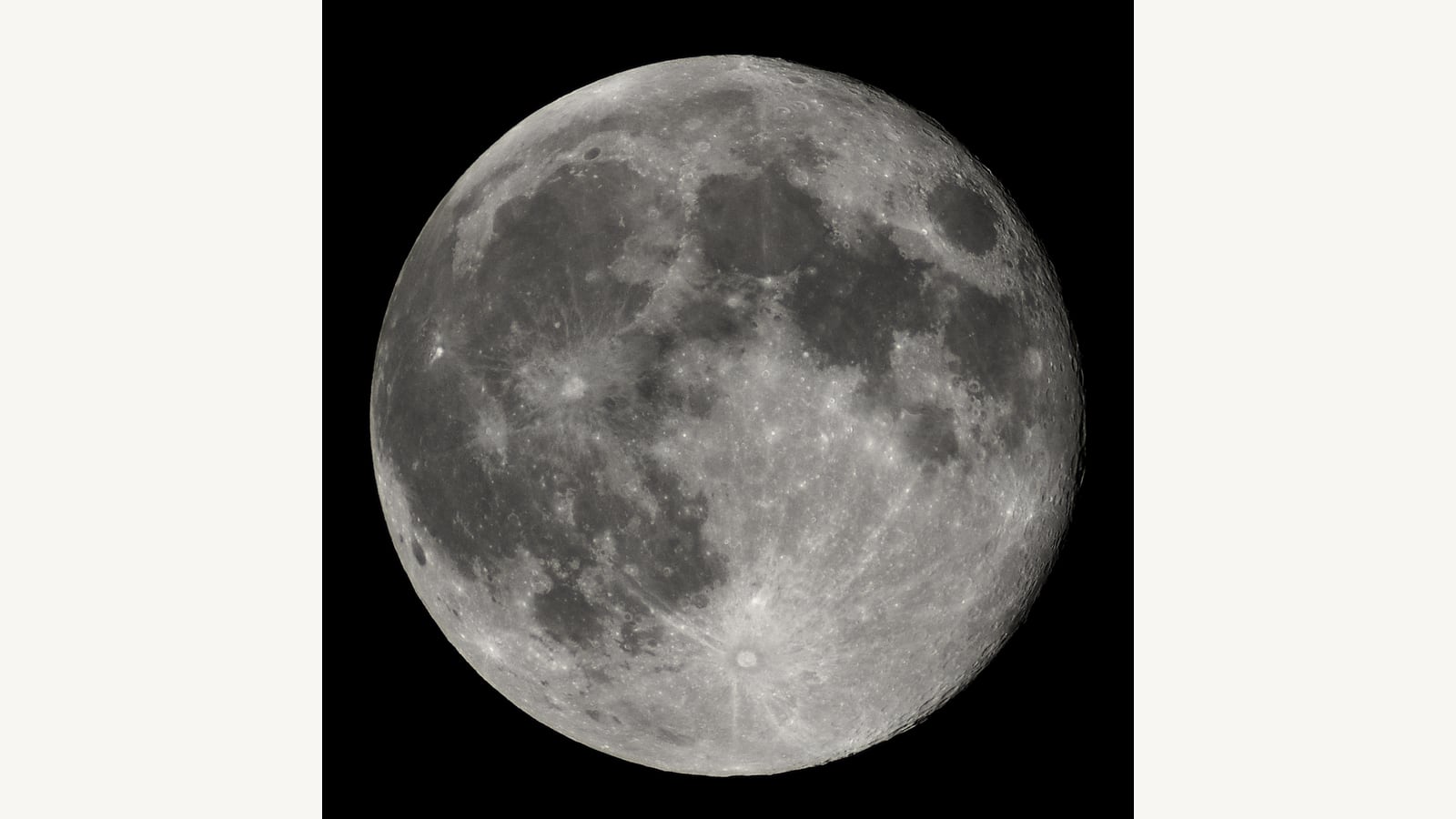
A crescent Moon can look as though something has covered most of a bright disc. But ordinary lunar phases are not caused by Earth's shadow falling across the Moon.
As NASA's Moon-phase guide explains, the Moon reflects sunlight. Usually half of it is lit by the Sun, while our view of that illuminated half changes as it moves around Earth. The result is the familiar progression from a thin crescent to a full-looking disc and back.
Two views of the same movement
A quarter Moon can be confusingly named: it looks half lit to an observer on Earth. The word quarter refers to its place in the cycle rather than a claim that just a quarter of the visible disc is bright.
The phase sequence repeats in roughly 29.5 days. It is a cycle of changing illumination as seen from Earth.
A shadow belongs to a different explanation
NASA's Moon phases and shadows lesson addresses the misconception that another object is blocking the light during ordinary phases. A lunar eclipse is the separate case in which the Moon passes into Earth's shadow. It is not the explanation for the crescent appearing each month.
The accompanying NASA Johnson STEMonstrations video uses a demonstration by astronaut Anne McClain to make the changing geometry easier to picture. It is an educational demonstration, not a prediction of an eclipse tonight.
Try a small observation record
Over several evenings, note the date, time and the shape you can see from a safe viewing place. A sketch is enough. Clouds and buildings will interrupt the record, so a missing observation does not mean that the Moon itself has disappeared.
Label the date and viewing direction on your sketch. Keep it as a record of what you saw, rather than treating a few observations as a prediction of the next eclipse.

About the author
RullikClear, sourced explainers on Australia and the world
Rullik is the pen name of the founder of Australia Illuminate (Auslume). Rullik writes plain-language explainers on life in Australia, from immigration, study and work to money, sport and screen culture, always linking to the official sources behind each story. Every story is reviewed before publication.
More from Rullik ↗