Watch the video
Player by YouTube. Open original video ↗
You do not need to travel to a launch site to see evidence of people working in orbit. The International Space Station can be seen from the ground when its path and the lighting conditions line up.
The useful starting point is a prediction for your own location. NASA's Spot the Station service provides viewing information, tracking and alerts. A time copied from a friend in another city may describe a different opportunity.
Overhead does not always mean visible
NASA explains that a visible pass depends on sunlight reaching the station while the observer has a sufficiently dark sky. The station may pass overhead without providing a useful sighting. Cloud and the view from your particular street can also make an opportunity difficult to use.
Read the location, date and time shown in the current prediction before leaving home. This article does not list a pass time that could become stale by the time you read it.
Know what you are looking for
NASA's viewing questions explain how to read a sighting: its duration, height and the directions in which it appears and disappears. The station looks like a bright moving point rather than a photograph of its solar panels. A telescope is not required for a naked-eye sighting.
Look for a safe place with a clear view in the relevant direction. There is no reason to use a road shoulder, enter private property or climb somewhere unsafe for a better angle.
Make it an easy shared activity
Check the prediction with a friend or visiting family member, explain which direction to watch and allow a few minutes to settle in. If clouds intervene, try another listed opportunity rather than treating the missed view as a failed experiment.
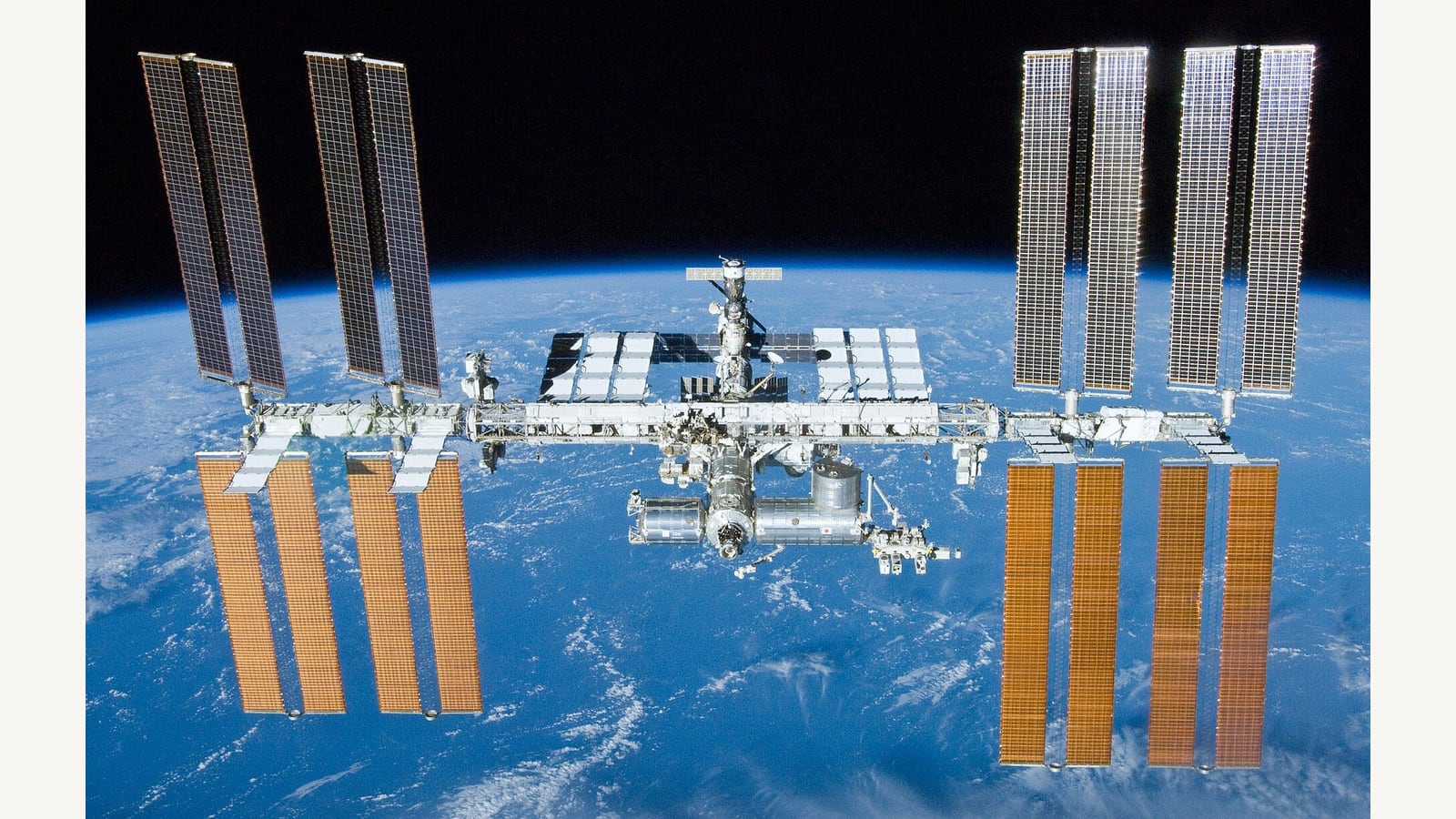
The accompanying NASA Johnson video introduces Spot the Station from aboard the station. It is an introduction to finding sightings, not live footage of a pass over your home. The cover photograph is a historical NASA image taken in 2010, not a current ground-level view.

About the author
RullikClear, sourced explainers on Australia and the world
Rullik is the pen name of the founder of Australia Illuminate (Auslume). Rullik writes plain-language explainers on life in Australia, from immigration, study and work to money, sport and screen culture, always linking to the official sources behind each story. Every story is reviewed before publication.
More from Rullik ↗