Watch the video
Player by YouTube. Open original video ↗
A bottle of seawater can help answer a question that a view of the ocean cannot. How warm is the water far below the surface? How much oxygen does it contain? How does a measurement compare with one taken along the same route years earlier?
Those questions sit behind a major Pacific research voyage described by CSIRO in late September. They also explain why ocean science depends on patient sampling, reliable instruments and people who understand the region, rather than simply a ship travelling a long distance.
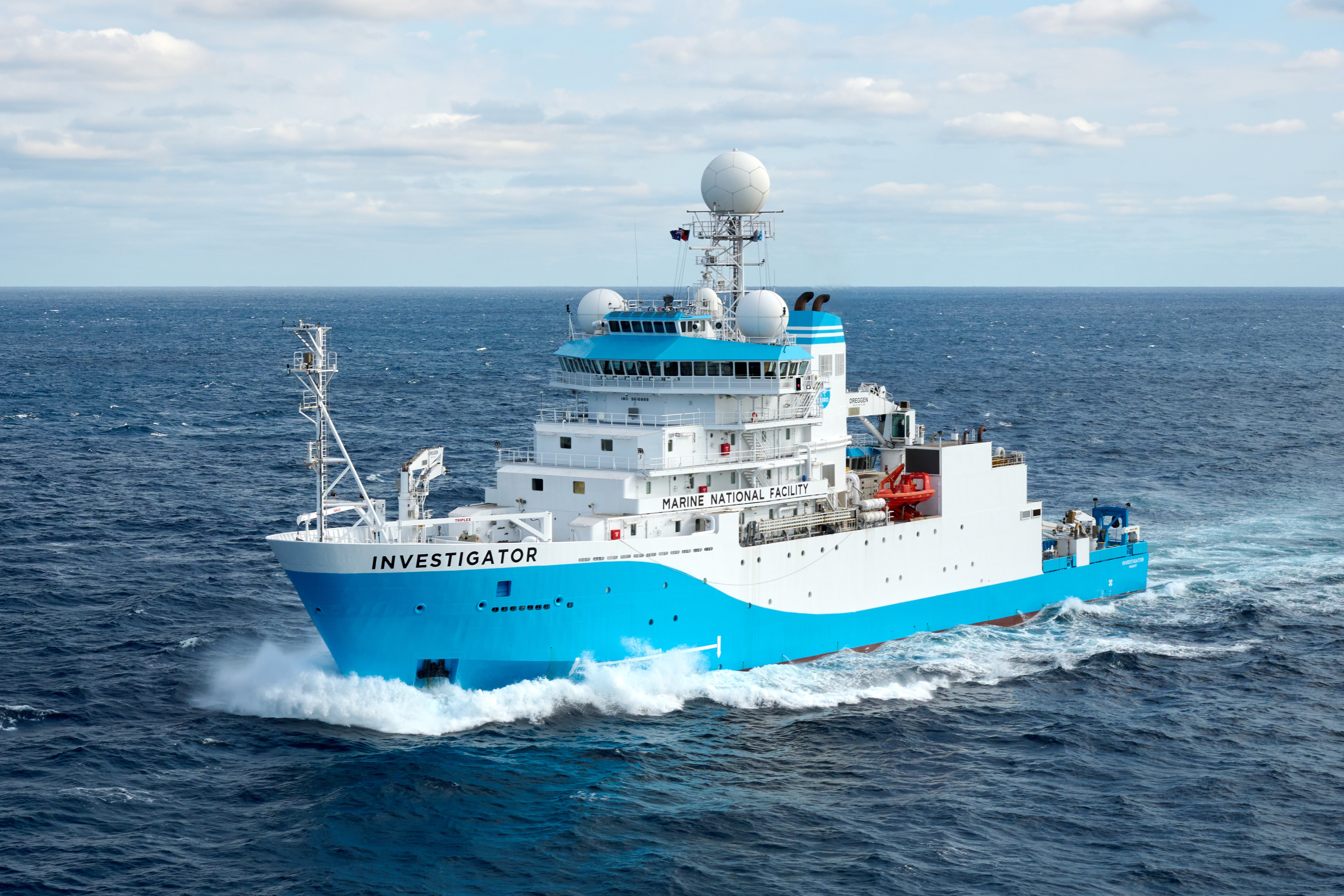
In its 25 September announcement, CSIRO said four early-career Pacific researchers would join Australia's research vessel Investigator through a partnership involving the Pacific Community and the Partnership for Observation of the Global Ocean. Two of the researchers were from Fiji. The announcement described a voyage planned between late September and December, extending through the Pacific towards the Antarctic ice edge.
That is an account of a planned research program. It does not establish the vessel's current location, or show that the voyage has already produced a particular scientific finding.
Returning to a route makes comparison possible
CSIRO's voyage plan, updated on 28 September, lists a journey from Lautoka to Hobart via Wellington, with work along a section near 170 degrees west. It identifies earlier occupations of the section in 2001, 2009 and 2016. The published plan runs from 27 September to 16 December 2026.
Returning to an established section gives researchers a basis for comparison. It does not make every difference between samples a long-term trend. Measurements still need checking, and their timing, depth and location matter.
Think of the route as a set of places where researchers can ask comparable questions again. A surface reading alone cannot describe the water below it. Nor can one unusually warm or cold sample, considered in isolation, explain the whole ocean. The value comes from connecting observations with the conditions under which they were collected.
For readers, that distinction helps separate a research objective from a research result. “Scientists will investigate change” is an accurate description of a plan. “Scientists have proved the cause of that change” requires completed analysis and supporting evidence.
What happens when the equipment goes overboard
One of Investigator's important sampling systems is the CTD, named for conductivity, temperature and depth. Sensors measure properties of the water while a frame carrying sampling bottles travels through it. Bottles can collect water at selected depths for further analysis.
The physical sample matters because a sensor reading and a laboratory measurement can answer different questions. Each bottle belongs to a documented observation. Researchers need to connect the sample with its collection location and depth, then keep that context attached as the water is analysed.
CSIRO's accompanying educational video shows how this equipment works. It is background explanation, not footage establishing what happened during the 2026 voyage. Watching the sampling process can nevertheless make the scale of the work easier to understand: the ship is supporting a sequence of carefully recorded measurements beneath the surface.
The instruments need their own checks before the observations can be compared. CSIRO's oceanographic calibration service checks marine instruments. Calibration matters when researchers need to know whether a difference comes from the water or from the way it was measured. Good equipment still requires attention to how its readings are produced.
Ships and autonomous floats do different jobs
Ocean observations do not all come from vessels. CSIRO describes Argo floats that drift beneath the surface, profile the water and transmit observations by satellite. A typical cycle takes roughly ten days, collecting temperature and salinity information as the float changes depth. Some floats carry additional sensors.
These observations complement ship-based research. This does not mean the current voyage is deploying a particular float unless the voyage documentation says so. It means different observing methods can contribute to the wider scientific picture.
An autonomous instrument can return repeated measurements without a researcher standing beside it. A staffed ship can support sampling, equipment handling and work requiring people on site. Treating one as a complete replacement for the other would miss the different questions each method can address.
The partnership is part of the story
Including Pacific researchers gives the voyage a human dimension beyond its route and equipment. The announcement describes participation and training opportunities. It is too early to claim what career outcomes or research collaborations will follow for each participant.
The important questions for later reporting are concrete. What work did the researchers undertake? Which skills can they use afterwards? How will observations be made available, interpreted and discussed with regional partners?
For now, the honest account is that an ambitious program has been announced and a detailed voyage plan published. The scientific value will become clearer through checked observations and subsequent analysis. The most useful follow-up will examine those results when they exist, rather than asking the departure announcement to stand in for them.

About the author
RullikClear, sourced explainers on Australia and the world
Rullik is the pen name of the founder of Australia Illuminate (Auslume). Rullik writes plain-language explainers on life in Australia, from immigration, study and work to money, sport and screen culture, always linking to the official sources behind each story. Every story is reviewed before publication.
More from Rullik ↗Sources
- https://www.csiro.au/en/news/All/News/2026/September/Pacific-researchers-join-Australias-landmark-ocean-and-climate-science-voyage
- https://www.csiro.au/en/about/facilities-collections/MNF/Voyages-schedules/Voyages/2026/September/IN2026_V06
- https://www.csiro.au/en/about/facilities-collections/mnf/research-vessel-equipment-data/deployable-equipment/ctd
- https://www.csiro.au/en/research/natural-environment/oceans/Argo-robotic-floats
- https://www.csiro.au/en/research/natural-environment/oceans/oceanographic-calibration